By Kita Johnson · · 6 min read
If you are over 40 and thinking about strength training for the first time — or the first time in a long time — I want you to hear this before anything else: you are not too late, and you do not need to be fit to start. You start so that you become fit.
I have coached people for about 30 years, and some of my favorite transformations have come from women who walked in convinced that lifting was "not for them." Strength training is not about becoming a bodybuilder. It is about carrying your groceries with ease, getting up off the floor without thinking twice, keeping up with the people you love, and feeling capable in your own body.
This guide walks you through exactly where to begin: what strength training actually is, what to do in your first weeks, how often to train, and how to stay safe while you build momentum.
Why strength training matters so much after 40
From our thirties onward, most of us slowly lose muscle if we do nothing to keep it. For many women, the hormonal changes around perimenopause and menopause can make that shift more noticeable. You might feel it as stairs getting harder, a sore back after gardening, or simply feeling less steady than you used to.
The encouraging part is that muscle responds to training at every age. When you regularly ask your muscles to work a little harder than usual, your body adapts by getting stronger. That strength shows up everywhere in daily life.
- Everyday tasks — lifting, carrying, climbing stairs — feel easier.
- Better balance and stability, which helps you feel more confident on your feet.
- Strength training is widely recommended as part of supporting bone health as we age.
- Many women notice better energy, mood and sleep once training becomes a habit.
What strength training actually means
Strength training simply means moving against resistance. That resistance can be your own bodyweight, a resistance band, a pair of dumbbells, a kettlebell, or a machine at the gym. You do not need fancy equipment to begin — a sturdy chair, a wall and a bit of floor space are enough for your first weeks.
Most good programs are built on a handful of basic movement patterns. If you train these patterns, you train your whole body.
Squat
Sitting down and standing up. A chair squat is the perfect starting point.
Hinge
Bending from the hips while keeping your back long — the move you use to pick something up from the floor. Glute bridges and hip hinges build this pattern.
Push
Pressing away from your body. Wall push-ups and counter push-ups are gentle, effective places to begin.
Pull
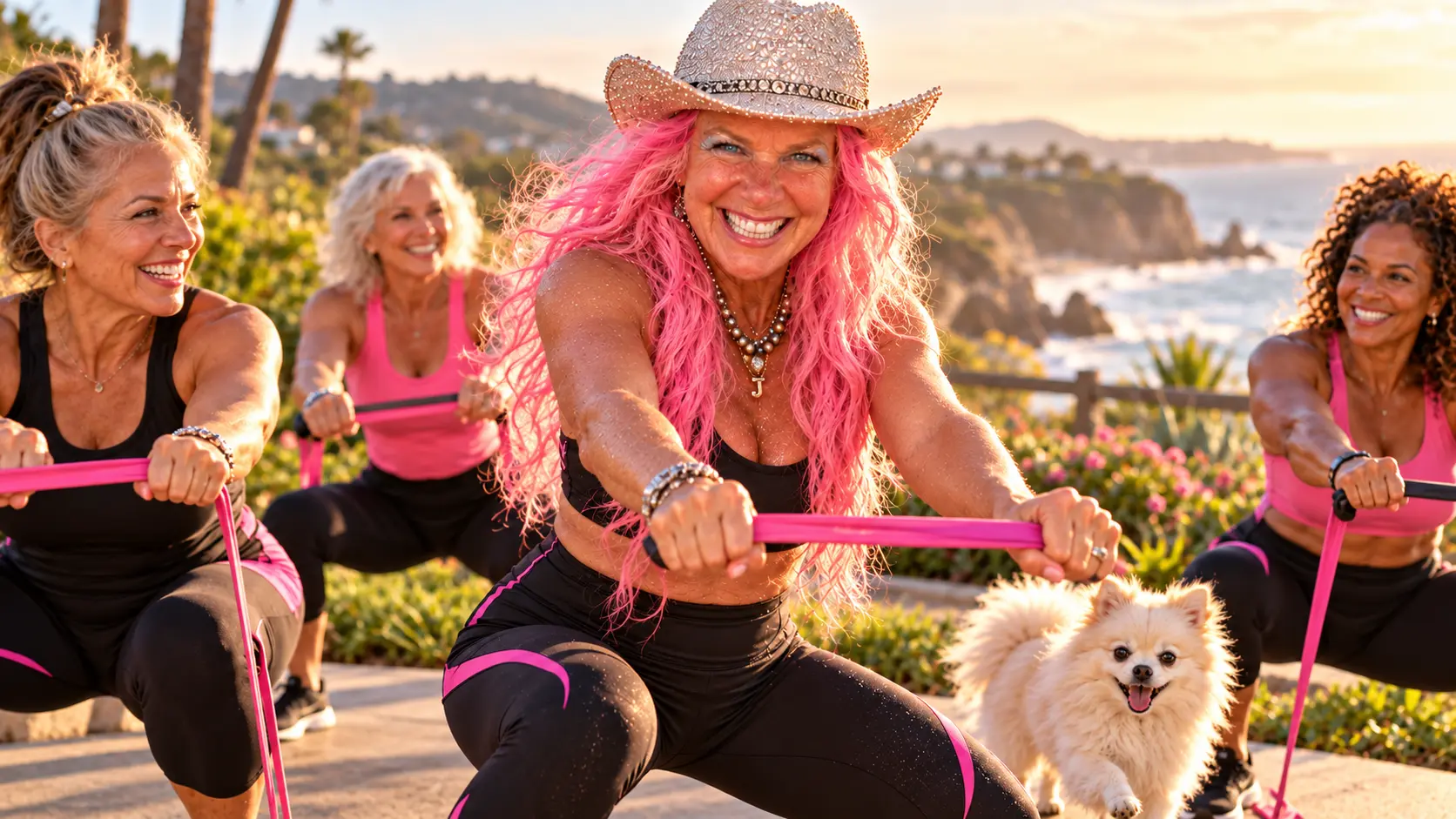
Drawing something toward you. Band rows or rows with light dumbbells strengthen the upper back, which helps posture.
Carry and core
Holding weight while you walk, and keeping your trunk steady. Think suitcase carries, dead bugs and bird dogs.
Your first four weeks: a simple plan
The goal of your first month is not to exhaust yourself. It is to learn the movements, build the habit and finish each session feeling like you could have done a little more. That feeling is what brings you back.
Weeks 1–2: learn the moves
Train two days a week, with at least one rest day between sessions. Do one or two sets of 8–12 reps of each of these:
- Chair squat
- Wall push-up
- Glute bridge
- Band or towel row
- Dead bug
Weeks 3–4: build a little
If everything feels comfortable, add a third session or a second set. Slow the lowering part of each move down to a count of three — it is a simple way to make an exercise more challenging without adding weight.
How heavy should you go?
A helpful rule: choose a level where the last two or three reps feel challenging but your form stays clean. If you could easily do ten more, it is time for a slightly harder version. If your form breaks down, step back to an easier version. There is no prize for going heavy too soon.
Progress can mean more reps, more sets, slower reps, a harder variation (moving from wall push-ups to counter push-ups, for example), or a little more weight. Small, steady progress beats big jumps every time.
Staying safe and comfortable
- Warm up for a few minutes first — marching in place, arm circles and gentle hip circles are perfect.
- Muscle effort and mild soreness the next day are normal. Sharp, pinching or joint pain is not — stop that movement.
- Breathe out during the hardest part of each movement. Do not hold your breath.
- If you have a medical condition, an injury, or you are unsure whether exercise is right for you, check in with your doctor first.
Make it stick: consistency over intensity
The best program is the one you will actually do. Put your sessions in your calendar like appointments. Keep a simple tracker and tick off each workout — that tiny moment of satisfaction is powerful. And on busy days, remember that ten minutes still counts. A short session keeps the habit alive.
If you are not sure which kind of support suits you best, the KitaFit Quiz will point you to a good starting point in a couple of minutes. You can also see every option side by side on the pricing page.
What a good beginner session looks like
A beginner strength session does not need to be long. Twenty to thirty minutes is plenty. Start with a short warm-up, move through five or six exercises that cover your whole body, and finish with a minute or two of gentle stretching and slow breathing.
Rest for about a minute between sets, or longer if you need it. Rest is not wasted time — it lets your muscles recover enough to do the next set well. Sip water, check in with how you feel, and keep your breathing steady.
Above all, keep it enjoyable. Put on music you love. Train somewhere you feel comfortable. Invite a friend. The more you enjoy your sessions, the more likely you are to keep showing up week after week, and that is where every result comes from.
Your next step
If you would love someone to simply tell you what to do each day, the 7-Day KitaFit Kickstart is built exactly for this moment. It is seven short guided workouts, designed for beginners and women restarting after a break, with no gym needed. One week, one stronger you.
Frequently asked questions
Is it safe to start strength training after 40?
For most healthy adults, yes — strength training is widely recommended at every age. Start with easy versions of basic movements and progress gradually. If you have a medical condition or injury, talk to your doctor before you begin.
How often should a beginner strength train?
Two sessions a week is a great start. Once that feels routine, many women move up to three sessions a week with a rest day between.
Do I need weights to start?
No. Bodyweight exercises like chair squats, wall push-ups and glute bridges are enough for your first weeks. A resistance band or light dumbbells are useful when you are ready to progress.
Will lifting weights make me bulky?
Very unlikely. Building large amounts of muscle takes years of very specific training and eating. For most women, strength training leads to feeling firmer, stronger and more capable.
This article is general education, not medical advice. Check with your doctor before starting a new exercise program.
Start your first strong week
The 7-Day KitaFit Kickstart: 7 short guided workouts, beginner-friendly, no gym needed — $27 one-time.
See the $27 KickstartGet Kita's weekly strength tips
Short workouts and real-life advice for women 40+, straight to your inbox.